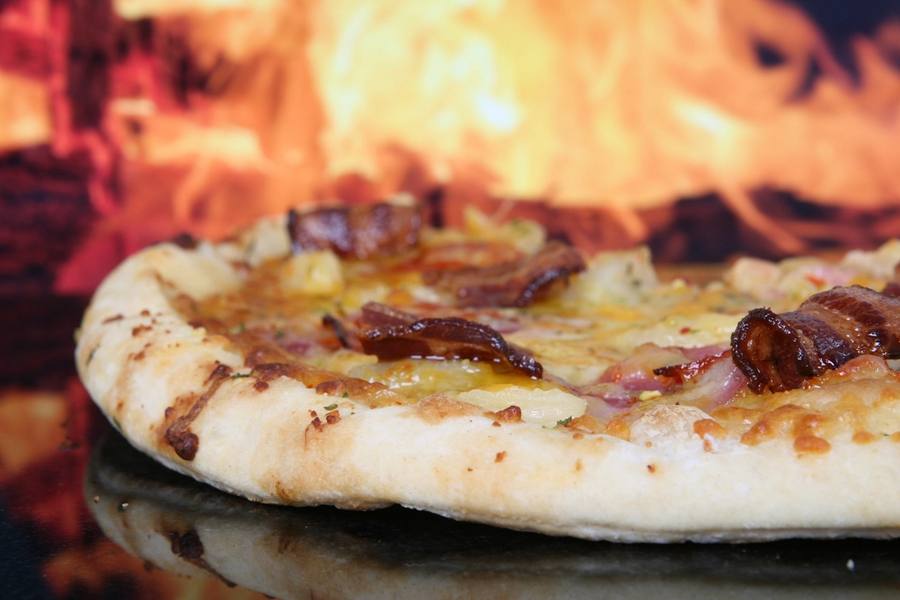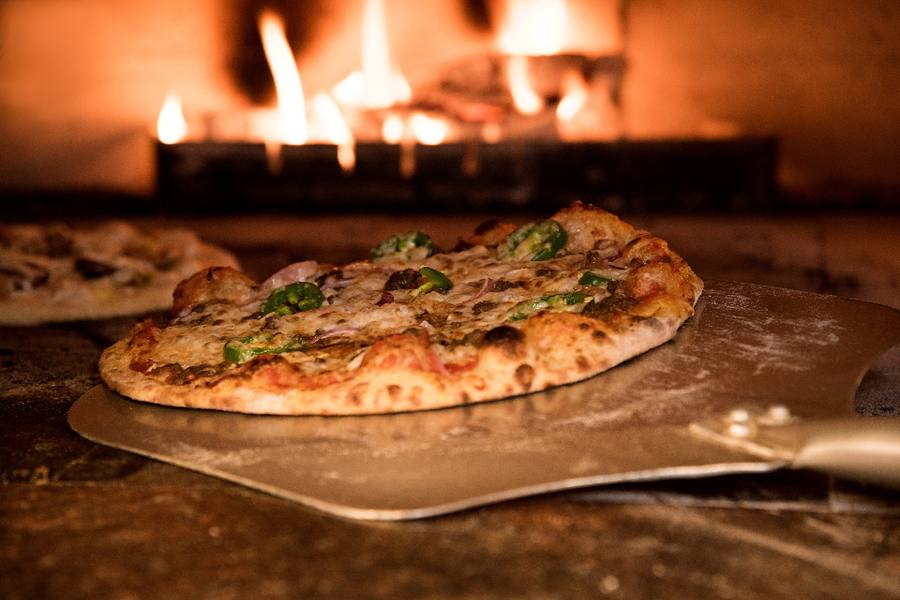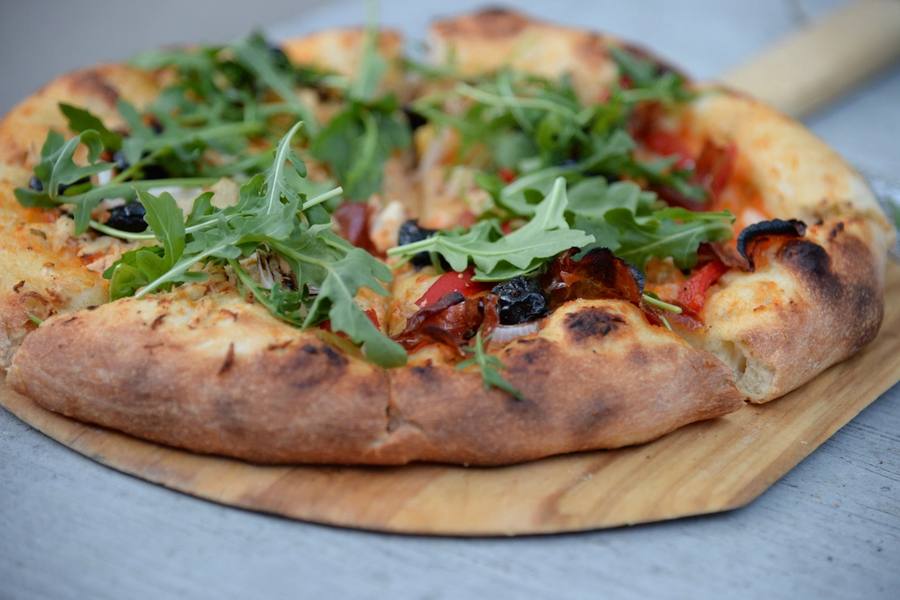
Representative image (stock photo); not the exact product.
Perforations Solve Sticking
Flour and semolina under a pizza act as tiny bearings that let it slide off a peel, and excess flour burns in the oven and tastes bitter.
A perforated peel lets the surplus fall through as the pizza is carried, leaving enough to release and not enough to burn.
That is the specific problem these solve, and it is the commonest reason a launch fails on a solid peel.
Two Peels Are The Standard Setup
A launching peel is wide and flat to carry a built pizza, and a turning peel is small and round to rotate a pizza in the oven.
Trying to turn with a launching peel is awkward and frequently pushes a pizza into the side of the oven.
Most people start with one and buy the second quickly, which is worth knowing when budgeting for a pizza oven.
Wood Or Metal
Wooden peels have a slightly textured surface that dough releases from readily, which makes them forgiving for building on.
Metal peels are thinner and slide under a cooked pizza more easily, and dough sticks to them more readily during building.
Building on wood and retrieving with metal is the arrangement many people settle on, though a perforated metal peel covers both adequately.
Handle Length And Oven Depth
A short handle means reaching into a very hot oven, which is uncomfortable and produces hurried movements.
Long handles keep hands clear and are unwieldy to store and awkward in a small space.
Matching handle length to the specific oven depth is the sensible approach, and telescopic handles cover both.
Building On The Peel
Building a pizza on a surface and transferring it to a peel is where most launch disasters happen, since dough sticks to whatever it was built on.
Building directly on a floured peel and launching within a couple of minutes is what experienced cooks do, since a topped pizza left sitting becomes damp and sticks.
A quick shake before launching confirms the pizza is moving freely, and a pizza that will not shake will not launch either.
Semolina is preferable to flour for dusting, since the coarser granules roll like tiny bearings and burn less readily than fine flour at pizza oven temperatures. Flour scorches and tastes bitter where semolina browns gently. A small shaker of semolina beside the peel is what most experienced pizza makers keep to hand.
Cleaning a peel matters more than it sounds, since baked-on dough and semolina build up into a rough surface that grips the next pizza and causes exactly the sticking it was meant to prevent.
Width should be matched to the pizza size intended, since a peel narrower than the pizza means the edges hang over and drag on launch.
Thin leading edges slide under a cooked pizza where a thick blunt one pushes it along the stone, which is what separates a good metal peel from a cheap one.
The Verdict
A tool where perforations and a second turning peel make the difference between launching cleanly and not.
One peel is not enough, dough sticks to metal during building, and long handles are awkward to store.
Build on the peel and launch quickly. A topped pizza left sitting on a peel welds itself to it.
At a glance
Pros
- Excess flour falls through and does not burn
- Slides under cooked pizza easily
- Metal is thin and durable
- Telescopic handles suit different ovens
Cons
- A turning peel is also needed
- Dough sticks to metal while building
- Long handles are awkward to store
- Perforations trap dough if left dirty
Frequently asked questions
Why does my pizza stick to the peel?
Usually it was built elsewhere and transferred, or it sat on the peel too long and went damp. Build directly on a floured peel and launch within a couple of minutes, and shake it before launching to confirm it moves.
Do I need two peels?
Effectively yes. A wide flat peel launches and a small round turning peel rotates a pizza in the oven. Turning with a launch peel is awkward and frequently pushes the pizza into the oven wall. Most people buy the second quickly.
Wood or metal?
Wood releases dough more readily and is forgiving for building; metal is thinner and slides under a cooked pizza more easily. Many people build on wood and retrieve with metal, and a perforated metal peel covers both adequately.
Specifications
| Type | Perforated metal pizza peel |
| Solves | Excess flour burning and sticking |
| Standard setup | A launch peel and a turning peel |
| Wood peels | Forgiving for building on |
| Metal peels | Slide under cooked pizza better |
| Handle | Matched to oven depth |
| Technique | Build on the peel, launch within minutes |
| Check | Shake before launching |
The bottom line
Perforations stop the burnt flour problem. Build on the peel and launch fast, and buy a turning peel.
Check Price on Amazon