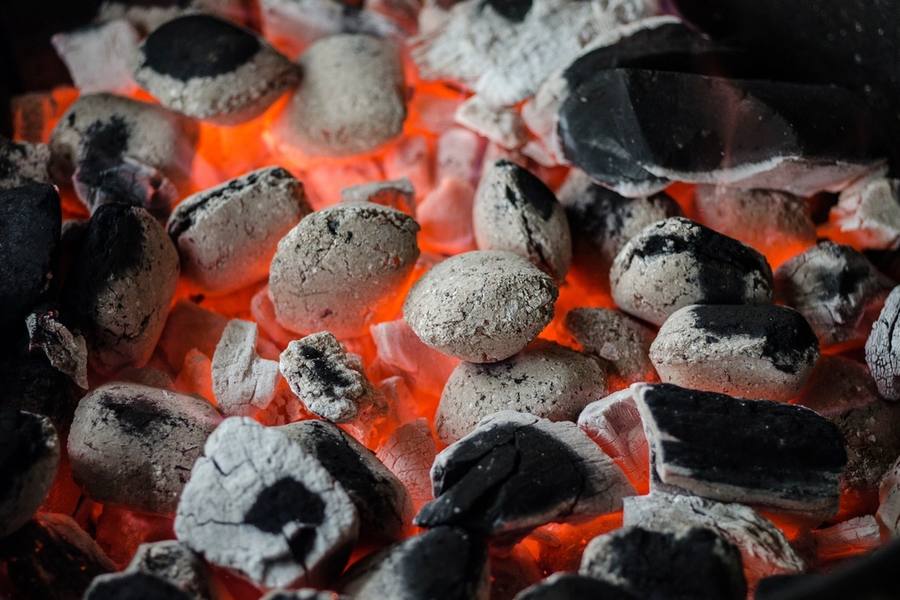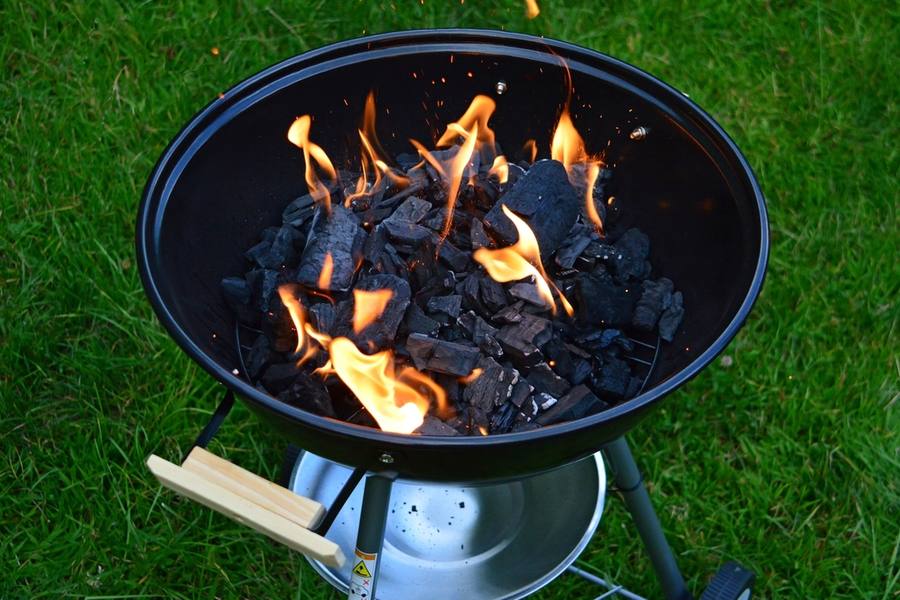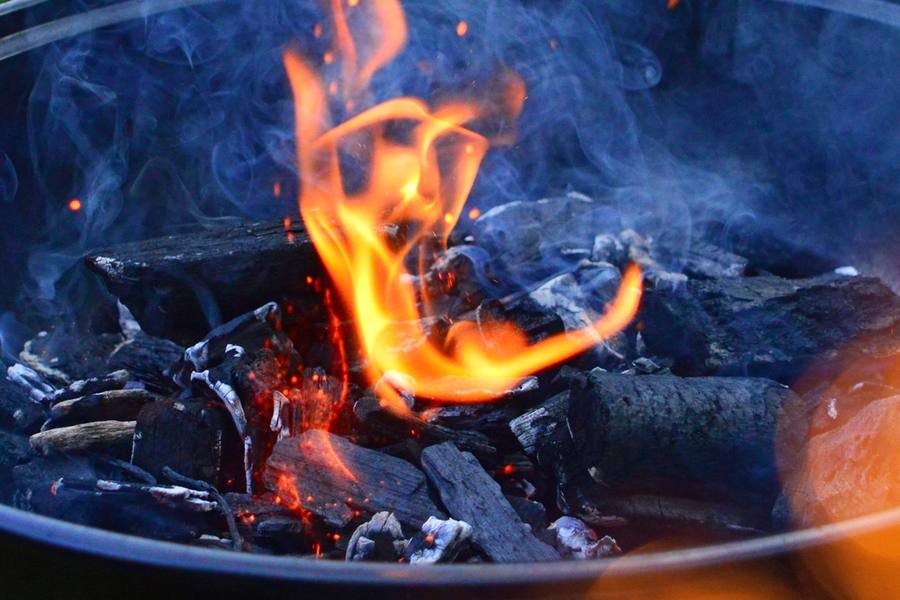
Representative image (stock photo); not the exact product.
Lumpwood Against Briquettes
Lumpwood is carbonised wood with nothing added, which lights faster, burns hotter and produces less ash than briquettes.
Briquettes are compressed charcoal dust with binders, which burn longer at a steadier temperature and produce considerably more ash.
Lumpwood suits high-heat searing and briquettes suit long steady cooks, and many people keep both for different jobs.
Consistency Is The Trade
Lumpwood comes in irregular pieces from fist-sized lumps to dust, which means a bag varies and the burn is less predictable.
Large pieces burn longer and small ones burn out fast, and the proportion varies between bags and between brands.
Briquettes are uniform by design, which is what makes them predictable and is why competition cooks frequently use them despite lumpwood burning hotter.
Sourcing And Deforestation
A substantial proportion of charcoal sold in Europe originates from tropical hardwood, including from regions with documented illegal logging.
Certification schemes confirm sustainable sourcing, and charcoal sold without any origin information is telling you something by omission.
Locally produced charcoal from managed woodland exists in most countries and costs more, which is a straightforward choice to make deliberately.
Additives And What To Avoid
Self-lighting and instant-light charcoal contains accelerants that impart a chemical taste, which is the same problem as lighter fluid.
Plain lumpwood and plain briquettes have nothing added, and a chimney starter makes self-lighting products entirely unnecessary.
Reading the bag for additives is worth the moment, since the difference in the cooked result is immediately noticeable.
Storage And Moisture
Charcoal absorbs moisture from the air, and damp charcoal is difficult to light, burns cooler and produces more smoke.
Storing it in a sealed container or a dry shed rather than an open bag outdoors keeps it usable.
A bag left in a damp garage over winter frequently lights badly in spring, which people attribute to the charcoal being poor.
Restaurant-grade charcoal from specialist suppliers is a genuine step up and costs considerably more, using dense hardwoods that burn hotter and far longer than supermarket products. For anybody cooking frequently, the price per cook is closer than the price per bag suggests, since less is used for the same result. It is also where sourcing information is most reliably provided.
Bag size affects value considerably, and large sacks cost far less per kilogram than the small bags sold at supermarkets in summer. Storage is the limiting factor rather than price, since a large sack needs somewhere dry to live for months.
Dust at the bottom of a bag is unavoidable and burns fast and hot, which makes it useful under larger pieces in a chimney rather than something to discard.
Reusing partly burnt charcoal is straightforward once a kettle is shut down by closing the vents, and the saved lumps light again readily alongside fresh fuel on the next cook.
Sparking and popping is characteristic of some lumpwood, since trapped moisture in dense pieces expands rapidly and throws small embers. Keeping a lid on during the first minutes and standing back while a chimney is lighting handles it, and briquettes do not do this at all.
The Verdict
The right fuel for high-heat cooking, where consistency and sourcing are the genuine considerations.
Piece size varies unpredictably, additives taint food, and sourcing is frequently undisclosed.
Check the bag for origin and additives. Unlabelled charcoal is telling you something by leaving it out.
At a glance
Pros
- Lights faster and burns hotter than briquettes
- Produces considerably less ash
- No binders or additives in plain lumpwood
- Certified sustainable options exist
Cons
- Piece size varies unpredictably
- Burns less steadily than briquettes
- Sourcing frequently undisclosed
- Absorbs moisture and lights badly when damp
Frequently asked questions
Lumpwood or briquettes?
Lumpwood for high-heat searing, since it lights faster, burns hotter and leaves less ash. Briquettes for long steady cooks, since they are uniform and predictable. Many people keep both for different jobs.
Does the brand matter?
The sourcing does. A substantial proportion of charcoal sold in Europe comes from tropical hardwood, including regions with documented illegal logging. Look for certification or local origin, and treat an unlabelled bag as informative.
Why will mine not light?
Probably damp. Charcoal absorbs moisture from the air, and damp charcoal lights badly, burns cooler and smokes more. Store it sealed and dry rather than in an open bag in a garage over winter.
Specifications
| Type | Natural lumpwood charcoal |
| Versus briquettes | Hotter, faster, less ash |
| Briquettes | Steadier and longer; more ash |
| Weakness | Inconsistent piece size |
| Sourcing | Look for certification or local origin |
| Avoid | Self-lighting and instant-light products |
| Storage | Sealed and dry |
| Damp charcoal | Lights poorly and smokes |
The bottom line
Hotter and cleaner than briquettes. Check the bag for origin — unlabelled charcoal usually has a reason.
Check Price on Amazon